
solid waste management

November 29, 2016

In the EPA’s Region 9 U.S.-Mexico Border Program Progress Report, April-September 2016

The Campo Band of Mission Indians (CBMI) staff members are working with the EPA and SCS Engineers to address their waste management needs. SCS Engineers, an environmental engineering firm, was contracted by the Border Environment Cooperation Commission to work with CBMI in response to their request for technical assistance.

SCS Engineers was contracted to prepare a waste characterization study to support the development of a zero waste plan. The study provides critical information for designing and developing the future programs, policies, and facilities to effectively achieve a zero waste program.

Based on the findings, CBMI will assess their infrastructure needs, including consideration of a transfer station. SCS Engineers conducted field sampling to assess the Golden Acorn Casino in September 2016, the same month that Jeff Scott, EPA’s Land Divison Director visited Campo.

The Border 2020 Program is the latest environmental program implemented under the 1983 La Paz Agreement. It builds on the Border 2012 Environmental Program, emphasizing regional, bottom-up approaches for decision making, priority setting, and project implementation to address the environmental and public health problems in the border region. As in Border 2012, the new Program encourages meaningful participation from communities and local stakeholders.
 

Posted by Diane Samuels at 3:00 am

October 26, 2016

Last week the Board of Directors of the Environmental Research & Education Foundation (EREF) awarded the most scholarships in its history to Masters and Doctoral students across the United States and Canada.

Congratulations to each of the twelve recipients including Caroline Larose at the University of Michigan.


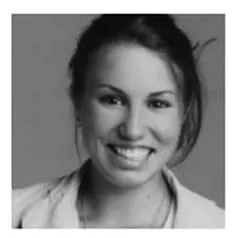
Caroline Larose, recipient of the 2016 Robert P. Stearns/SCS Engineers Scholarship from EREF for her analysis of urban waste programs to promote and practice sustainability.

Caroline Larose was awarded the Robert P. Stearns – SCS Engineers Master’s Scholar this year. Her project, “Material Flows: Strategies to Reduce Ann Arbor’s Municipal Solid Waste and Improve Diversion,” consists of a comprehensive benchmarking analysis of urban waste programs and a review of city stakeholders to distill a set of MSW management, education, and awareness best practices. Following her research, Caroline plans to draft recommendations for the City, which will include updated MSW goals and an action plan to improve diversion and reduce waste creation.

About Caroline Larose

Caroline chose to go back to school to further her pursuit of making cities more sustainable. She identified solid waste as her primary research focus and has worked towards her idea of eliminating waste as a concept. Caroline is now in her third year as a dual MBA/MS student at the Erb Institute for Global Sustainable Enterprise at the University of Michigan.

Caroline works to promote waste reduction and diversion on campus and throughout the Ann Arbor community by advising the implementation of campus-wide composting and uniform bin signage, as well as by organizing events such as the first Ross School of Business Waste Audit & Education Day and annual clothing swaps. Caroline, a member of the University-wide Student Sustainability Initiative board, has served as the VP of Sustainability for the Ross Net Impact chapter for 2-years. As a result of her leadership on campus, Caroline was selected to join the Ann Arbor Resource Management Team, advising the City of Ann Arbor on how to reduce its solid waste and improve diversion.

Posted by Diane Samuels at 3:00 am

October 24, 2016

Getting a firm handle on a solid waste  operation and expenses is a challenge for any solid waste agency manager or landfill operator. It is particularly imperative in this era of “lean and mean” budgets and looming regulatory policy. Doing more with less is the watchword for most operations across the country still reeling from the financial impacts of the Great Recession.

SCS Engineers has created a package of articles to help you identify if your landfill, landfill gas, or solid waste operation is ready for 2017. We hope this useful guidance will help you plan for the upcoming year. SCS professionals are always available to answer questions and provide advice. Find the office or SCS professional nearest to you by clicking on one the links here: Offices and Professionals.

Download, print or share this package by using the download button under the articles or by using the navigation at left. The package includes the following information written by SCS National Experts:
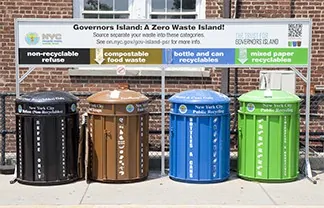
  • New Rules for Landfills
  • How the Latest NSPS Rules will Affect Small to Mid-Size Landfills
  • Current Leading Issues in Solid Waste Financial Planning
  • The Value of a Solid Waste Rate Analysis


Posted by Diane Samuels at 3:00 am

October 18, 2016

zero_waste_NY_SCS_Engineers_sm

No. The solution is to confront the myths being painted on the state of recycling.


Read the full article by Marc Rogoff, SCS Engineers.


Posted by Diane Samuels at 3:00 am

October 3, 2016

SCS provides several reasons.

A solid waste rate analysis will provide your agency with a deeper understanding of how to establish rates and appropriately allocate costs to the various functions of your operation. This financial analysis can also be used to estimate and plan for various contingencies year-by-year.

For example, if your agency would like to buy new collection vehicles or expand your landfill or recycling center, a rate study will allow you to assess how the purchase would impact your current budget. You can then determine if you will have adequate surpluses during the fiscal year to procure these items or if a rate adjustment might be necessary at some point.

Importantly, if the final recommendation of the rate study is a rate increase, you will be armed with information that will strengthen your case when requesting a fee increase.

Read and share this newly published article by Marc J. Rogoff, Ph.D., and Laurel Urena, M.S., E.I.T., of SCS Engineers. Learn more about this valuable service at SCS Engineers and see how others are using rate analysis.

Read and share the full article

Learn more about Rate Analysis

Read how one organization used rate analysis as part of their solid waste master plan

Posted by Diane Samuels at 3:00 am

September 14, 2016

“This program directly supports the county’s Roadmap to a Sustainable Waste Management Future by helping businesses to implement recycling programs,” says Leonard. “And not only recycling but waste reduction, as well, all of which, of course, contribute to reducing greenhouse gas emissions, resource management and sustainable materials management.”

Read the article about L.A. County’s Plan for Sustainable Waste Management


Posted by Diane Samuels at 6:00 am

August 17, 2016

SCS periodically prepares technical bulletins to highlight items of interest to our clients and friends. These are published on our website. This SCS Technical Bulletin addresses:

Inactive Surface Impoundments and EPA Direct Final Rules for Disposal of Coal Combustion Residuals from Electric Utilities.


Read and share the SCS Technical Bulletin here.

SCS Coal Combustion Residual Services


Posted by Diane Samuels at 12:22 pm

July 20, 2016


Interior construction debris during separation process.

Imagine 170 dump trucks stacked one atop another. That’s how much construction debris CDR diverted from landfills in 2015. Read about CDR’s award winning strategy.


Construction and Demolition Recycling Inc. is a California state certified C&D recycling facility which handles debris from the renovation, construction, and demolition of commercial interior spaces. CDR is the only facility in California that accepts only commercial interior debris, and the only facility in the country that can show a better than 80% diversion rate of these materials traditionally buried in landfills.

CDR’s staff also salvages usable items such as furniture, desks, chairs, file cabinets, and more, for reuse, donating more than 50 tons of these materials every month to not-for-profit agencies and other organizations. All of this allows CDR to divert over 80% of all inbound debris from landfills, a diversion rate that has been third party-verified by the Recycling Certification Institute.

The CDR facility in South Gate, California is a fully permitted C&D/inert debris processing and transfer facility. The facility is owned and operated by Interior Removal Specialist, Inc. (IRS), a demolition company that conducts demolition activities primarily of the interior of offices and other commercial buildings. Construction and Demolition Recycling Incorporated’s goal is to lead by example; showing that the diversion of tenant improvement demolition debris can be accomplished as efficiently and cost effectively as the debris from more traditionally recognized demolition debris. CDR has become the first and so far only recycling facility in Southern California that has earned Third Party Diversion Certification from The Recycling Certification Institute, making CDR the only facility in Southern California that is eligible to provide the US Green Building Council LEED Pilot Point for facilities with 3rd party verification.

Read the full article to learn some of the innovative strategies of this successful recycling company in “Construction and Demolition Debris Recycling Program; How CDR was Conceived and How CDR Remains Sustainable.”

Solid Waste Management, Sustainability, and Recycling Programs


Posted by Diane Samuels at 1:05 pm

July 13, 2016

By following the simple procedures governing selective routing in the commercial space, it is possible to turn a high disposal garbage collection system into a high diversion recycling system, without incurring additional costs or losing collection revenue. Read more…

Tracie Onstad Bills of SCS Engineers and Richard Gertman of For Sustainability Too explain the steps for commercial-stream routing and management of commercial recyclables with remarkable results in their Resource Recycling article published in June 2016.

Questions? Ask Tracie, she writes a blog series about recycling.

Contact Tracie directly. 

Posted by Diane Samuels at 6:00 am

July 6, 2016

Contamination causes major problems for recycling programs. Improving communication plays a pivotal role in solving the issue.


Tracie Onstad Bills, Northern California Director, Sustainable Materials Management at SCS Engineers

Thank you for the responses and questions about my blog Minimizing Contamination in Recycling. It seems appropriate to provide answers to the most frequently asked questions and send more advice. Any program should be tailored to your current collection system; what works and what doesn’t work for your locality; the demographics of your community; and how your community views recycling.

In light of those considerations, here are some recommendations for ways to minimize contamination in recyclables:

  • Mail outreach materials to business and residents on a regular basis. When your community is adding recycling or switching to a new recycling program, mail outreach starting 6 months before the new services begin to inform and prepare the community for the change. Then every other month send new information about the program so people get used to hearing about the upcoming program, what is expected of them, and the positive difference they are making in their community.
  • Use social media to get your message out, Including NextDoor, Facebook, Twitter, the local government/community website, newspapers, community TV stations, and radio. One of the people who responded to my previous blog, Cyril May, even uses magic as a part of his environmental outreach. He is the recycling coordinator for the City of Waterbury, CT, and uses magic to demonstrate the power of recycling when he goes door-to-door or speaks at schools. “Turning a ripped up newspaper into a new newspaper shows the magic of recycling that everyone has,” he says. “Causing dollar bills to vanish in smoke and flame showcases the taxpayer dollars lost when we send valuable recyclables to incinerators.”
  • After the service starts, follow up with additional outreach. Highlight what people should do as well as what they should not do. Yes – I am a firm believer in excellent outreach, education, and communication!
  • Some studies have suggested providing trash cans that are the same size as the recycling can, because when the recycling is free, people often will throw their trash into the recycling containers in order to keep a small trash container for a cheaper cost. I am not an advocate of this method, however, I am a realist and know that this is one cause of contamination, so keep an eye on it!
  • Make sure your hauler keeps track of any contamination issues and the causes. Knowing what the contamination is and why it is caused, will help you determine the next steps on how to address it. For example, if you have slight contamination because residents and businesses are throwing in items that they think are recyclable, you can continue to educate them about what can and cannot be recycled. However, if they are putting trash in the recycling containers in order to save costs, that is another matter that needs to be addressed appropriately, and may include citations or fines.
  • Many people throw more than they should into their recycling containers because they think “the hauler will sort it at the facility,” and so they don’t feel the need to be extra cautious about how they sort. As part of your outreach, I would recommend letting the community know that the cleaner the materials, the better the market and the more economical the service. They need to understand that there are consequences when they are not careful about how they recycle.
  • Make sure that the materials you accept in your recycling program can, in fact, be recycled. Cities often accept items in recycling containers because they can be recycled in theory (for example, milk cartons and polystyrene), when, in fact, they may not be. Depending on the local dynamics, recycling markets, recoverability at the recycling facility, or other barriers, certain materials may or may not be recycled. Be consistent with the materials you accept and don’t take items that may cause confusion.
  • In California, we have very diverse demographics and multiple languages. Providing outreach in those different languages, and even better, with pictures, will help your community fully understand the recycling program.
  • Go into the schools to get the kids engaged and excited about recycling. If you are starting a new recycling program, facilitate an assembly right before and/or after the service starts. Kids often influence their family’s behavior in such matters.
  • Multi-family dwellings should be treated differently than single-family residences. Because residents of multi-family dwellings do not typically pay for the service directly, their containers will almost always be contaminated because there is no ownership of the responsibility. There are other barriers as well, such as illegal dumping, fluctuation of tenants, move-in or move-out purging of material, etc. I have a different set of recommendations for multi-family dwellings which I consider one of the toughest nuts to crack.
  • Make sure the recycling haulers place non-collection tags on containers that are contaminated. After a few violation notices and the threat to suspend service, residents and businesses usually improve, especially when they realize that someone is watching them.
  • Be diligent when transitioning to your new recycling program and closely monitor how your residents and businesses are doing. I would recommend having a few interns go out for the first month or two and conduct random lid flips. Leave notes that say “good job – you’re an excellent recycler” to reinforce the good behavior. This will also provide a pulse on how the program is doing, where the problems are, and if there are certain districts of the city that are more contaminated than others. By isolating the areas that have high contamination, you can focus your outreach and education to the regions that need message reinforcement.
  • Be flexible. Remember that your program will be evolving, so go with the flow, and be sure to celebrate your successes!

Learn more about recycling programs by reading Success In Selective Routing – Resource Recycling or the SCS project and case studies below:


As always, feel free to send me your questions and comments. Contact Tracie here.


Posted by Diane Samuels at 6:00 am
SCS Address

Corporate Headquarters

SCS Engineers
3900 Kilroy Airport Way Suite 300
Long Beach, CA 90806
FAX: 1 (562) 427-0805

Contact Us

Required Posting
Send us a message
×