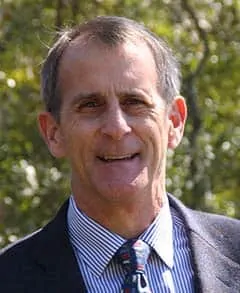
The American Academy of Environmental Engineers and Scientists (AAEES) recently nominated and confirmed Robert Gardner as the Solid Waste Association of North America (SWANA), Trustee to the Board. His term began January 1, 2019, and extends until December 31, 2021.
Mr. Gardner is a Senior Vice President of SCS Engineers and leads SCS’s solid waste management practice, including landfill engineering, landfill gas management, solid waste studies, landfill environmental systems, liquids management, operation and maintenance, and construction.
Mr. Gardner is also SCS’s National Expert on Solid Waste Collection and Routing, supporting municipalities and businesses nationwide to continue or expand their sustainable recycling-reuse programs despite international export restrictions and market fluctuation.
AAEES, a not-for-profit organization serves to protect public health and the environment by recognizing leadership and excellence through accredited Board Certification of Environmental Engineers and Scientists and with professional development opportunities. Mr. Gardner’s expertise supports multiple programs in the solid waste management industry, which have a profound positive impact on the environment, climate change, and human health.
Mr. Gardner is a Professional Engineer in thirteen states and Puerto Rico. He is an AAEES Board Certified Environmental Engineer (BCEE) in Solid Waste Management. In addition to serving the AAEES, Gardner is an active member of the American Society of Civil Engineers, Solid Waste Association of North America, National Society of Professional Engineers, National Waste and Recycling Association, and the Environmental Education and Research Foundation.
Meet SCS Engineers professionals at the 2018 Iowa Recycling and Solid Waste Management Conference and Trade Show, October 8-10 at the Mid-America Center in Council Bluffs, Iowa.
Registration for this event is open. We hope to visit with you at SCS’s booth 104. Earn CEUs at these conference sessions.
Odor management remains one of the most daunting tasks for any solid waste facility. Part I of Pat Sullivan’s series on odor management at solid facilities covered regulatory
requirements with two case studies detailing real-world examples of facilities battling odor issues. Part II of his series covers odor assessment, monitoring and
mitigation strategies.
Part I – Regulatory Requirements
Part II – Assessment, Monitoring and Mitigation
About the author, Pat Sullivan
National Waste and Recycling Association is sponsoring a FREE 90-minute webinar on December 6 at 3:00 pm ET. The webinar is highlighting the programs, strategies, and best practices of their six 2017 Recycling Award Winners.
The recipients will describe their unique blend of technologies, outreach, and program management that made a difference in their communities. The audience will have a chance to ask questions and find out how to implement these innovative ideas into their own operations and businesses.
Agenda:
More Solid Waste Management resources and success stories here.
These grants often target rural areas that don’t necessarily have the support needed to catch up in today’s world of rapid technological advances. A quick Google search shows that at the national level, the USDA offers a Solid Waste Management Grant which may be applied to the cost of program improvements such as landfill evaluations, technical assistance, or training. For this particular grant, any local government, academic institution, or nonprofit servicing an area with fewer than 10,000 people may apply.
This type of funding presents an opportunity for SCS to help address clients’ financial burdens. Awareness of the grants available is a common obstacle, but with some region-specific research, potential project identification, guidance and assistance with grant funding SCS can enhance your arsenal of services.
Here are some places to look for funding:
Contact the authors if you have questions: Ryan Duckett and Quinn Albertson, we’re always happy to help.
In February Dane County opened their expanded C&D Recycling Facility with its adjacent 4,800 sq. ft. Clean Sweep building. The facility accepts materials in segregated or mixed loads from home demolition projects, new residential and commercial construction, and large quantities of shipping materials such as pallets and cardboard. See coverage of the opening on the local news station.
According to an article in WMW County Executive, Joe Parisi is quoted as saying:
This new facility will extend the life of our landfill, recycle more materials, save millions for taxpayers and create jobs. This facility will be run on waste heat from our landfill and continues our efforts to increase our renewable energy for all of our county facilities.
This is a win for taxpayers and a win for our environment. Dane County will continue to be a leader in our efforts to protect our environment.
In addition to the environmental benefits of landfill diversion, the County is proud of the many new jobs created and the $600,000 taxpayer dollars saved. Months later, are the results still as good as projected? As a matter of fact, they are.
Congratulations to Dane County and the Department of Public Works.
Read about this award-winning project and the County’s waste screening process by clicking here.
This article provides the SCS methodology used to make projections for the financial performance of solid waste collection and disposal during a five-year planning period for the City of Pensacola, Florida. The projections were then used to model different possible rate structures for approval by the City Council.
After discussion and two public readings of the ordinance amending the sanitation rate, the Pensacola City Council adopted a new monthly sanitation rate and established a sanitation equipment surcharge. These additional revenues enable the full funding of departmental services to continue and will provide for ongoing replacement of sanitation equipment.
Read the article published in Waste Advantage Magazine.
Cutting Solid Waste Collection Costs
A six-month pilot program was initiated to identify possible program savings and how the program would be rolled out to its residents. An SCS Engineers rate study conducted at that time suggested possible operational savings, which could enable the City to defer a solid waste rate increase. The good results shown during the pilot program encouraged the City decision-makers to move ahead with once a week collection. The latest statistical data from the City of Clearwater, Florida shows a 21% decrease in solid waste generation and an annual savings of $107,000 in tipping fees. Operational savings for the City achieved the projected $400,000 savings as forecasted in the SCS rate study.
Assessing the Financial Performance of Operating and Proposed Solid Waste Programs
Financial analysis is an increasingly important issue in solid waste decision making. In an era where the mantra of doing more with less” is on the lips of most political decision-makers, it is critical to assess the financial performance of operating and proposed solid waste programs. The three issues discussed in this article provide some guidelines on how these kinds of assessments can be conducted.
Visit SCS Engineers at WasteCon and ISWA, in Baltimore MD.
SCS Management Services™ helps many of our clients’ incorporate economic planning, financial analysis, and feasibility studies into their master planning and have requested copies of our articles. All can be found and filtered by topic area, and we are always ready to help you find the information you need.
Our articles may be printed or shared using the icons on the left navigation bar. Or, you may share or email this page to keep it handy. SCS respects your privacy; we do not monitor or collect your email address or information.
Contact Vita Quinn for more information. Ms. Quinn is SCS Engineers’ National Expert on Solid Waste Finance and Rate Studies. She has 12 years of experience as a financial analyst and management consultant. She has extensive experience working for local government and has developed financial sustainability solutions for various general governments, special revenue funds, and utility enterprise funds. Ms. Quinn has an MBA in Finance and a Bachelor’s Degree in International Economics.
 An Exercise in Sound Fiscal Planning: A Rural County’s Public Works Professionals Evaluate Future Solid Waste Service Scenarios, Costs, and Financing Options
Residential Automated Collection Makes Sense for Idaho Falls
The Nuts and Bolts of Implementing a Residential Automated Collection Program
Conducting a Rate Analysis as Part of a Master Plan Study in Killeen, Texas
https://www.scsengineers.com/scs-articles/conducting-a-rate-analysis-as-part-of-a-master-plan-study/
 Financial Tools Assist in Completing Cost of Service Studies
Conducting Solid Waste Rate Studies and Business Plans
https://www.scsengineers.com/conducting-solid-waste-rate-studies-and-business-plans/
Get a Firm Handle on Solid Waste Costs to Optimize Performance
https://www.scsengineers.com/get-a-firm-handle-on-solid-waste-costs-to-optimize-performance/
Cash Flow Analysis Forestalls Long-Term Debt
Is Privatization the Answer? You Need to Consider Several Factors Before Making the Decision for Solid Waste Services
https://www.scsengineers.com/publications/articles/page/11/
Developing a Strategic Business Plan for Your Agency
Economic Feasibility 101 – Understanding the Tools of the Trade
Assessing a Solid Waste Agency’s Financial Health
Are Your Rates Correct? Collection and Disposal Rate Studies are a Valuable Tool
Integrating Financial Analysis into Solid Waste Operations Planning
 High Costs and Limited Markets Put a Crack in Glass Recycling
Recycling Trends in the United States
https://www.scsengineers.com/scs-articles/6555/
 Calculated Decisions: An Engineer’s Feasibility Report Can Help Communities and Financiers Assess the Risk of a Waste Conversion Project
Anaerobic Digester Economics
Give SCS a call or send an email to if you have questions. Find your local office here: https://www.scsengineers.com/locations/. Visit our Solid Waste Planning Services page for additional information, articles, whitepapers, and case studies.
There is no single best approach to financing fleet replacement costs. With the financial challenges facing local governments today in providing cost-effective and timely solid waste management services, evaluation of these various approaches should be made focusing on ways to minimize costs while providing value-added services to the public.
Marc Rogoff discusses a number of alternative vehicle/equipment purchasing programs, which are being used by solid waste agencies to preserve cash. Each of the financing methods described has its own particular advantages and disadvantages, which can be influenced by local municipal circumstances.
Read the complete article here.
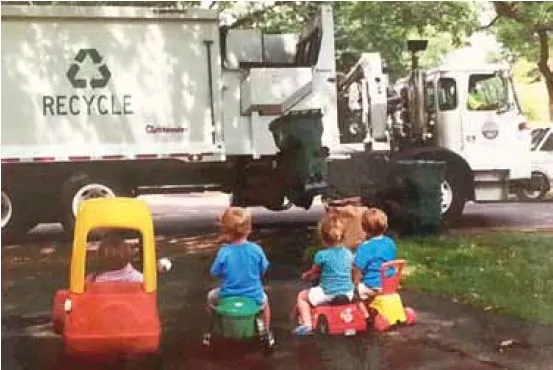
Read and share the WasteAdvantage article describing the solution process here. Written by:
Corporate Headquarters