We continue SCS’s Advice from the Field blog series with guidance from an article in MSW Magazine by Daniel R. Cooper, Jason Timmons, and Stephanie Liptak.
The authors of a recent article in MSW Management Magazine present engineering ideas that provide for more efficient construction of a GCCS. Gas system operators will benefit by having fewer pumps to operate and maintain and shallower headers that are more easily accessible. Odor management will be easier along with other benefits.
Read the full article here to learn about the design elements for maximizing long-term benefits, impacting: bottom liners, location of the blower/flare station, leachate risers, extraction well targets, and external header piping.
It is challenging to restore properties with a past, but you can do it on time and on budget if you plan ahead to address contaminated historic fill. Follow these tips and use the brownfield redevelopment checklist to keep your next redevelopment on track.
Design Phase
Consider how contaminated historic fill impacts the following:
Site feature locations – You can reduce or even eliminate landfill disposal costs by carefully selecting locations for your building, underground parking, parking lot, utility, and green space.
Storm water infiltration – Do you know that storm water infiltration devices must be located in areas free of contaminated historic fill? Infiltration devices cannot be located where contaminants of concern (as defined in s. NR 720.03(2)) are present in the soil through which the infiltration will occur.
Subslab vapor mitigation system – Already know you have contaminated historic fill on site? Consider adding a subslab vapor mitigation system to the design of your new building. It is usually much cheaper to install this system in a new building than to retrofit one into an existing building. It can also mitigate radon gas.
Planning & Design
Determine if contamination requires the following plans to manage the construction phase:
Material management plan – It establishes how you will separate excavated contaminated material from material that is not contaminated. It also outlines how you will handle contaminated material, either by disposing of it off site in a landfill or reusing it on site in an approved area such as a paved parking lot. This plan also covers screening, sampling, and testing contaminated materials, if required.
Dewatering plan – If the development requires excavation through contaminated historic fill to depths below groundwater, you will need a dewatering plan to properly manage discharge of the water. You may be able to discharge the water to the storm sewer or the sanitary sewer depending on the type and concentration of contaminants. You must determine local and state permit requirements before implementing your dewatering plan.
Demolition plan – The demolition plan for removing existing structures during redevelopment should include handling, removal, and disposal of potential contaminants such as lead and asbestos. The demolition plan should also address recycling and reuse of existing on site materials like concrete. You may be able to save money by crushing and reusing concrete on site as fill material, or by hauling and crushing it off site to reuse it as fill at another property. This approach can save you considerable money compared to landfill disposal.
Ready to start saving time and money addressing contaminated historic fill at your next redevelopment? Contact Ray Tierney for help evaluating your options in the Upper Midwest, or using the SCS Brownfield Redevelopment Checklist .
Live in another part of the country? SCS Engineers offers brownfields, remediation, due diligence, and all appropriate inquires services nationwide. Contact us today at .
Learn more about these services at SCS Engineers; read our case studies and articles:
Brownfields and Remediation
Due Diligence and All Appropriate Inquiries
Temporary Landfill Caps
Temporarily capping landfill slopes is becoming a common measure for landfill operators. There are many benefits to closing landfill slopes with geomembrane on a temporary basis. One of the benefits is delaying construction of the final cover. Following is a discussion of the steps that should be taken to determine whether temporarily capping the slope with geomembrane and postponing the final cover construction is a better financial/operational decision.
Cost Burden
Constructing the final cover is costly, and it is considered an unavoidable expense that has no return on the money spent. Therefore, some operators perform a financial evaluation to determine whether the final cover construction costs can be delayed (provided, of course, that such delays are acceptable to the regulating agency). When evaluating whether to delay the final cover, the cost of maintaining the slopes during the postponement period should be considered. The operator must look at the financial aspects of either closing the slopes with a temporary geomembrane or of leaving the slopes open during the postponement period.
Temporary Landfill Capping Option
The benefits of temporarily capping the slopes during the postponement period may include:
The other side of the coin is the expense associated with the temporary cap. There may be repair costs associated with the geomembrane every few years in order to ensure that the temporary cap remains intact.
Leaving Slopes Open Option
The option of leaving the slopes open during the postponement period involves maintenance expenses such as:
The benefits of leaving the slopes open are twofold: first, the operator will save the costs of constructing the temporary cap; and second, the operator will gain additional airspace as waste settles during the postponement period.
Experience with the Temporary Capping Option
As discussed above, both options provide the benefit of gaining additional airspace during the postponement period. Constructing a temporary cap involves the costs of materials and installation, including the geomembrane and the ballasting system that keeps the geomembrane in place. Generally, the financial and non-tangible benefits of a temporary cap that remains in place five years or longer are more attractive than leaving the slopes open; therefore, most operators choose to install a temporary cap. The next step in the financial evaluation should be comparing the costs of the temporary cap to permanently closing the slopes without postponement.
Final Step in the Financial Evaluation
The next question is whether it makes financial sense to postpone the construction of the final cover.
Waste settlement during the postponement period and the resulting airspace are considered the determining financial factor in choosing the right option. If the present worth value of the airspace generated from waste settlement during the postponement period is greater than the cost to construct the temporary cap at the present time, then the temporary cap option would make financial sense; otherwise, the final cover should be constructed without postponement.
It should be noted that the length of the postponement period plays a very important role in this financial equation. Longer postponement periods have the potential for a greater gain in airspace. Another incentive that should be factored into the financial evaluation is the potential return on the money set aside for the final cover construction during the postponement period.
To assist with this financial evaluation, landfill operators are encouraged to discuss these options with their landfill engineers. Settlement models can be performed to calculate the amount of airspace that may be generated during the postponement period as well as the present worth value of the generated airspace. The returns on the final cover construction costs during the postponement will just be “icing on the cake.”
Read the related Advice From the Field blogs from the landfill and LFG experts at SCS Engineers:
Contact the author: Ali Khatami or your local SCS Engineers’ office.
Typical Conditions
The organic matter that is placed in landfills goes through a decomposition process that is exothermic and releases heat inside the landfill space. There are also other exothermic processes such as metal corrosion, hydration, carbonation, and acid-base neutralization that contribute to the heat generation phenomenon in landfills. Municipal solid waste has a relatively low heat conductivity characteristic, which means the heat is not as easily conducted through the waste keeping the landfill interior generally warmer than the areas near the landfill exterior.
Landfills expel the heat in different ways; propagating through the waste mass to the air, ground, leachate, and gas heat sinks. The heat escapes the landfill at its boundaries by convection to the air above the landfill surface and by conduction to the ground below the waste. Heat can also escape from landfills through liquids and gases removed from the landfill. For example, by conduction, via leachate that flows through the waste and is removed by leachate sumps and by convection, and via gases generated inside the landfill that are removed through the gas collection system.
Special Conditions
The large majority of landfills in the country show no signs of special conditions indicating too much heat. The characteristics noted in this blog have been observed in a few large, deep, wet landfills. Field investigations at landfills with high temperatures revealed that the highest temperatures are generally located at mid-point to the two-thirds depth of waste from the top surface. Temperatures as high as 250 °F have been recorded by specialized measuring devices.
Under certain conditions, elevated temperatures may occur inside a landfill, and the excess heat changes the character of chemical reactions taking place in the landfill, such as the decomposition process of the organic matter. Other documented changes that may take place in accumulated heat conditions are: leachate becoming stronger with higher BOD, lower pH, higher carboxylic acids and salts; concentrations of certain acids increasing; carbon dioxide and carbon monoxide generation increasing; the ratio of methane to carbon dioxide decreasing; hydrogen generation increasing; landfill odors changing to a significantly pungent character; landfill settlement rates increasing; gas generation and gas pressure increasing; leachate generation increasing; along with other changes.
Research
Heat generation in landfills is studied by researchers, reported in technical literature and scientific papers by academia and the industry. A summary of the findings related to the amount of heat generated from municipal solid waste in landfills is presented in Table 1 of Heat Generation in Municipal Solid Waste Landfills posted on the California Polytechnic State University, Robert E. Kennedy Library website.
Since the issue of high temperatures in landfills is of extreme importance to landfill operators with respect to compliance, operations, and financial aspects of these cases, finding out the cause and sources of excess heat is a hot subject in the field of landfill science. The largest research grant supporting the on-going research in this field was awarded by the Environmental Research & Education Foundation (EREF) in December 2014. So far, three parts of a technical article explaining chemical mechanisms through which organic matter decomposes and generate various types of other chemicals and heat have been published by the researchers of the above grant in Waste360. The research is on-going, and more information will be published in future. Links to the first three parts of the above article are provided here:
Prevention, Diagnosing and Managing ETLFs
SCS was involved in the preparation of standards for large, deep and wet landfills for a major waste operator in 2016. The intent of the standards is to implement measures to prevent elevated temperature conditions in large, deep, and wet landfills. SCS’s experience at such landfills and its in-depth knowledge can be valuable to those waste operators who are either experiencing elevated temperature conditions in their landfills or want to prevent conditions forming in their landfills proactively.
About the Author: Dr. Ali Khatami
Join SCS Engineers at the Global Waste Management Symposium to learn more, or click these links read about our landfill and landfill gas to energy services, clients, and articles.
Contact a professional near you at .
Discovering unexpected pockets of soft soils at the time of construction can delay your project and drive up costs for landfills, support features, and many other types of construction. If you don’t find them, building over them can result in unexpected settlement affecting a structure or building, or cause a slope stability problem for a berm or stockpile. You can avoid both of these scenarios with early investigation and appropriate construction planning.
While landfill development investigations typically require numerous soil borings within the proposed waste limits of the landfill, it’s common to overlook perimeter areas. Pockets of soft soil deposits can be associated with nearby existing wetlands, lakes, or rivers; with wind-blown silt or ancient lake deposits from periods of glaciation; or with fill placed during previous site uses.
The landfill perimeter areas may contain tanks for leachate or fuel, buildings, perimeter berms for screening or landscaping, stockpiles, and other features. A tank or building constructed over soft soils could experience unexpected settlement affecting the performance and value of the structure. The potential for a slope stability problem can increase for a large berm or stockpile built on soft soils.
The first step to avoid these problems and identify problem soils is to include perimeter areas in your subsurface investigation. Perform soil borings or test pit excavations at the locations of the proposed perimeter features such as tanks or berms. If you encounter soft soils, address them like this:
Contact SCS’s geotechnical engineers for more information on how to find and test soft soil areas early in a landfill’s project schedule, so you can effectively address associated construction issues in a way that considers cost and minimizes unexpected project delays.
Pat Sullivan discusses two case studies that provide examples of two different approaches to odor management. The proactive approach resulted in a more positive outcome than the reactive approach. Although the odor issues never go away completely, the proactive facility has avoided lawsuits and regulatory enforcement and continues to have a positive working relationship with the community.
SCS Engineers freely shares our articles and white papers without imposing on your privacy.
Click to read Part I of this two part series. We’ll let you know when Part II is published soon.
Tuesday, October 10, 1:00 pm – 2:30 pm ET
This Air & Waste Management Association webinar covers the effective, sustainable operation of municipal solid waste (MSW) landfills in today’s changing environment.
The latest updates to EPA regulations in over two decades limiting air emissions from landfills will be reviewed in detail.
Participants will learn the available models for quantifying landfill gas generation emissions and which model to use in different situations as well as energy recovery from landfill gas, its emissions, and how control requirements can affect feasibility.
Oil and gas processing facilities, federal and local governments, landfills, land developers, contractors, industries with industrial hygiene plans can spend too much money for too little information if they don’t have an understanding of the limits and capabilities of their equipment and methods before the development of their Air Monitoring Plan (AMP) . That’s before considering the risk to their employees and to public health.
Even if you can’t afford a dedicated air monitoring group, you can eliminate the health risks, overwriting a plan, or overburdening your budget. A cost-benefit analysis and integrating stakeholders’ goals can help provide the guidance you need to develop a balanced air monitoring plan.
Start with this list of considerations when developing an Air Monitoring Plan (AMP). The list is followed by tips and suggestions which are helpful under specific circumstances.
Location of the monitoring site is initially dependent on the monitoring objective. For example, once it is known that there is a requirement to monitor for peak ambient H2S at a microscale site, it reduces the monitoring site location to specific areas. Hence, the first task when evaluating a possible site location is to determine the scale for which a candidate location can qualify by considering the following:
1. Location and emissions strengths of nearby sources, especially major source;
2. Prevailing wind direction in the area;
3. Nearby uniformity of land use;
4. Nearby population density.
To select locations according to these criteria, it is necessary to have detailed information on the location of emission sources, the geographical variability of ambient pollutant concentrations, meteorological conditions, and population density. Therefore, selection of the number, locations, and types of sampling stations is a complex process. The variability of sources and their intensities of emissions, terrains, meteorological conditions and demographic features require that each network is developed individually. Thus, selection of the network will be based on the best available evidence and on the experience of the decision team.
Developing an Air Monitoring Plan (AMP) can be a daunting task. There are many decisions to make that have downwind ramifications relative to budget, logistical constraints, and labor requirements. In addition, there may be competing goals in regards to the project stakeholders. SCS has the experience developing and implementing air monitoring plans and systems to meet these challenges; including developing site specific and network-wide AMPs for various monitoring objectives. SCS also understands the costs and demands of the implementation of AMPs on industry and government.
If you need to perform Air Monitoring or are in the initial steps of developing an AMP please contact for expert advice and guidance specific to your region and industry. We have robust programs and experts nationwide. We can also incorporate the use of remote monitoring controls and monitoring by our FCC authorized drones.
Author: Paul Schafer, SCS’ National Expert Ambient Air Monitoring
 Thanks to you, our clients, SCS Engineers has received many awards and industry recognitions for research achievements and technology innovations. Engineering News-Record (ENR) recently released the Top 500 Design List, ranking SCS Engineers in the top 100 for the 9th year in a row. In the same publication, SCS is ranked in the Top 10 Sewerage/ Wastewater Firms.
Thank you for your friendship, your business, and the opportunity to serve you.
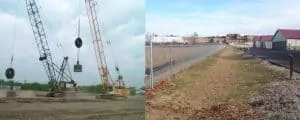
Historic fill is common on properties that were once rural and have become prime redevelopment sites as communities expanded. The fill may include contaminated materials like foundry sand, ash, demo and construction debris, and even municipal waste. In the past, these materials were used to fill wetlands or change the grade of the property before initial development. Today regulations have evolved, and state agencies require property owners to manage these materials appropriately during redevelopment. Also, particular types of historic fill are often not robust enough to structurally support your new building.
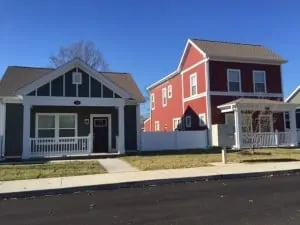
There are many different kinds of fill materials – each with different physical properties and different potential contaminants. Knowing what is on your property before you start designing the site layout, and certainly, before you start digging, will help you plan your project to save time and money, and to receive state agency approval.
Before You Buy
The more you know about the property and the earlier you know it, the better prepared you will be to make decisions about how best to protect yourself from potential environmental liabilities and prepare for the environmental and geotechnical issues that historic fill can cause. Since every property is unique, the first thing you need to do is gain a thorough understanding of the property’s history and past use. Invest in a comprehensive Phase 1 Environmental Site Assessment (ESA). Consider it a starting point for clues about the possible types and amounts of historic fill which may be present on the property.
If the results of the Phase 1 ESA warrant it, conduct a Phase 2 ESA and geotechnical study to collect soil, fill, groundwater, and soil vapor samples. The Phase 2 ESA and geotechnical studies will help you understand if fill and contaminants are present and the best options for addressing them during the development planning stage.
Historic fill on a property is no longer the impediment to development that it once was. Take these steps to get ahead of potentially contaminated historic fill, and keep your project on time and budget.
By testing early, performing a proper geotechnical evaluation, and incorporating design adaptations where needed, you can successfully develop projects with historic fill within your schedule and without breaking your budget.
SCS professionals are available to answer questions or concerns you may have pertaining to commercial, residential, or private development on brownfields – we provide remediation, brownfields, and Environmental Due Diligence services nationwide. Contact or one of our experts.
 About the author: Ray Tierney
Ray Tierney, PG, is a Vice President of SCS Engineers and one of our National Experts on Sustainability. He has 30 years of experience in environmental and sustainability engineering and has helped a wide range of organizations control and reduce their legacy environmental impacts and liabilities, lower their costs, obtain grants and permits to expand, and implement cost-saving practices. Ray serves the Midwest region and projects throughout the U.S.
JohnTabella, PG, LEED AP®, is SCS Engineers National Expert for Environmental Due Diligence and for Federal Services. In this capacity, he oversees all aspects of environmental services opportunities and projects primarily throughout the eastern seaboard and supports on opportunities and projects throughout the U.S.
Floyd Cotter specializes in solid waste management projects. His project work involves all areas of solid waste management including planning, permitting, transportation, landfill design, construction, and monitoring. Floyd is also experienced in general civil engineering, construction oversight, environmental site assessments, closure and post-closure plans, and permit and contract document preparation. Floyd is located in the Central region.
Randy Bauer has nearly 3 decades of experience conducting environmental site assessments, subsurface investigations, groundwater monitoring programs, soil and groundwater remediation, and geotechnical investigations at industrial hazardous waste and solid waste facilities. Randy is available to answer questions on the western seaboard.
Corporate Headquarters